I don’t often post in Blog World because I’m writing. Beyond the Boneyard is done! And now I’m researching a novel set in the 1500s that involves a missing head, an argument between a pope and a politician, and secret letters. But let’s stay in the late 1800 to mid-1900 for Beyond the Boneyard.
It takes place in Louisville, Ky., mostly on a farm near the WWI military training facility, Camp Zachary Taylor that became Camp Taylor neighborhood. It is a family saga about saving a farm from government taxes and tariffs, war and weather, and a man’s love for a woman out of his reach. It is informed by my family of pickers and farmers and my childhood hours of playing in ruins of the Camp. Here is how the story opens.
BEYOND THE BONEYARD: 1940
The old farmhand set out to find a perfect limb of wood that held beauty and strength and took his knife’s blade with ease. Passing the ancient oak that shaded the barnyard and the cedars that shadowed Abbots’ graveyard, Ben followed the path to the cornfield that led into the woods. At the sycamore, he rested his bad knee, flattening his hand over black scars that marked white bark. When Ben was a sixteen-year-old boy who knew too little, he’d shot the tree with Mr. Abbott’s rifle. Now, he was a sixty-three-year old man who knew too much.
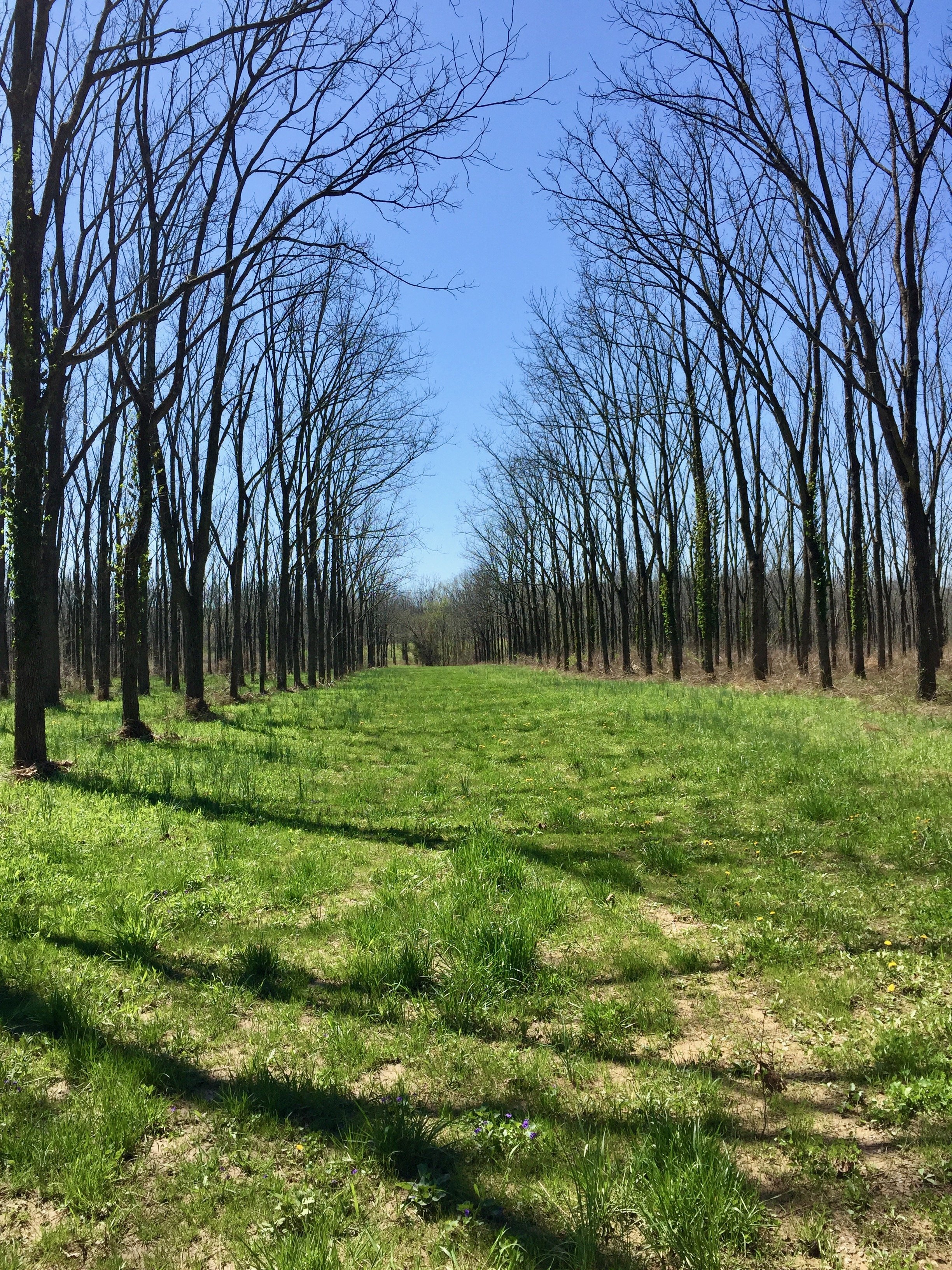
At the creek, Ben stepped over flat rock. On the other side of the water, he tracked a deer path through a field of purple coneflowers to a remote grove of trees with darkly-ridged trunks. One hundred walnut trees formed precise rows of majesty that, with their canopy of green fronds, formed nature’s cathedral. Walking the rows, he came upon a perfect limb in wild grass. Picking it up, he gripped its knobby end. He would carve it into a Cardinal’s head, sand its crest, paint the bird red. With his pocketknife, he would whittle a bit of chocolate-colored bark from its staff to show its pale sapwood. Holding the tip of the limb to the ground, he gauged its height and leaned into it. Ben would shape the tight-grained strength of walnut into a fine cane for Mr. Abbott’s son.
When Chase Abbott was seventeen, without telling Ben or securing Mr. Abbott’s approval, he planted walnuts that poisoned the soil and nothing much beyond Kentucky bluegrass grew within reach of the trees’ roots. Chase volunteered for the Great War, returning two years later with a gargoyle’s face and gassed lungs. For twenty-three years, the walnuts grew tall while Chase declined death’s repeated invitations and now pain in his leg and lungs urged his acceptance.
Ben carried the limb through the walnut grove and coneflowers. This, land, its people, its loves told more than Chase’s story. It held Ben’s story that did not begin with once upon a time on a Kentucky farm, but on March 27, 1890, Ben’s thirteenth birthday, in the quiet of an Ohio dawn.